He's a 10: Another Ad Format Has Entered the Arena
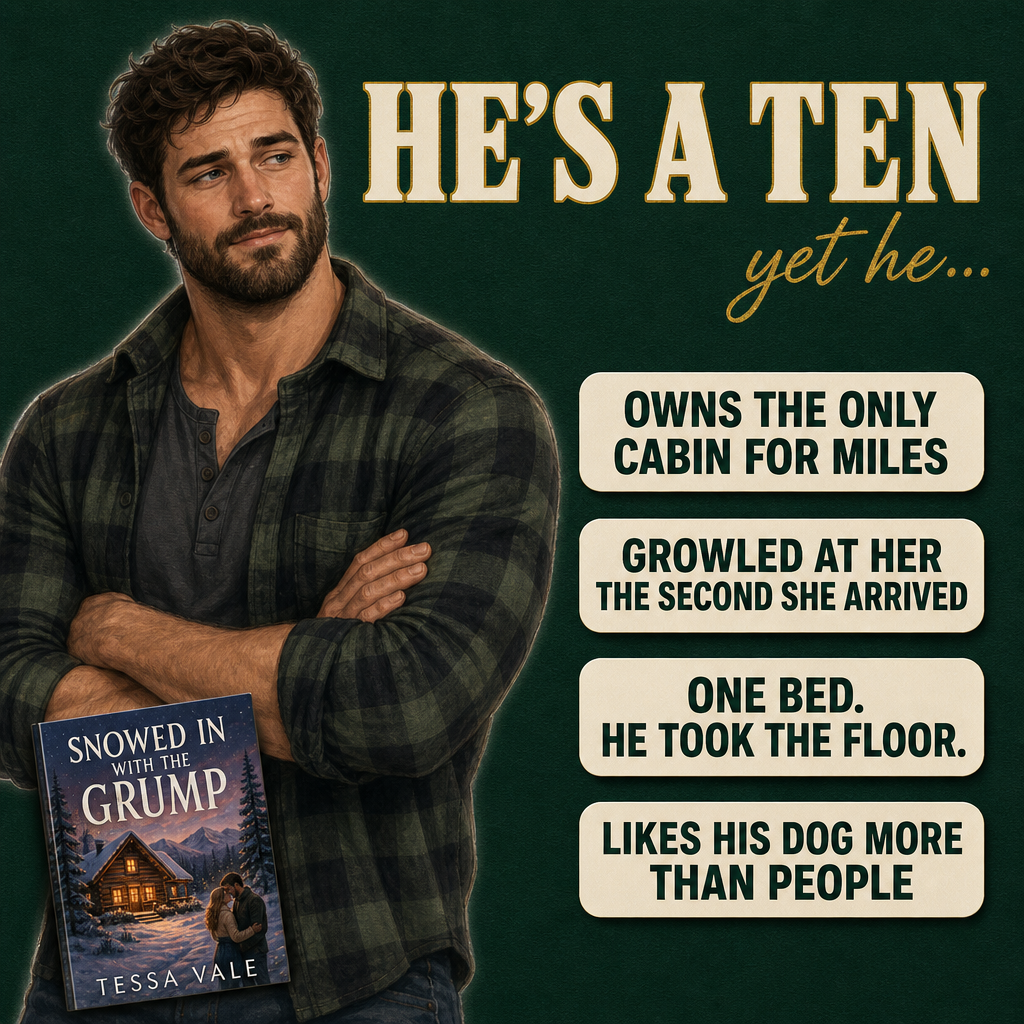
If you've spent any time on BookTok or inside a romance ad account this year, you've seen the "He's a 10 but…" format. Bold HE'S A TEN headline, a hot illustrated love interest, and a stack of red-flag callouts pulled straight from the book – "TRICKED HER INTO MARRYING HIM," "WON'T SAY THE L WORD," that kind of thing. It's everywhere right now.
So I did what I always do with a trend: I ran it against my own data instead of trusting the vibes.
The question I wanted to answer was simple. Does the He's-a-10 format actually move Cost Per Unit – or is it just a fun creative that performs like everything else?
The Test
I pulled every He's-a-10 ad I've run across three different KU romance books – three different authors, three different subgenres – and compared their average Cost Per Unit against every other static image ad running for that same book. Split-panels, cover ads, character creatives, all of it. Traffic campaigns, US audiences.
Quick definition: CPU (Cost Per Unit) is what it costs me to generate one unit, where a unit is a KU borrow or a sale. Lower is better. It's the number I actually care about.
The Results
Small Town Romance: He's-a-10 won, and clearly – $4.54 CPU vs $5.24 for everything else. That's 13% cheaper per unit.
Billionaire Romance: A dead heat – $9.82 vs $9.99. Call it a 2% edge, which is basically noise.
Sports Romance: Another tie, this time a hair the other way – $4.94 vs $4.84.
| Book | He's-a-10 CPU | Other Static CPU |
|---|---|---|
| Small Town Romance | $4.54 | $5.24 |
| Billionaire Romance | $9.82 | $9.99 |
| Sports Romance | $4.94 | $4.84 |
| Average | $6.43 | $6.69 |
The Average
Across the three books, He's-a-10 ads averaged $6.43 CPU against $6.69 for the rest of the static rotation – about 4% cheaper overall. Most of that edge came from the small-town book; on the other two it essentially matched the field.
But here's the part I found most interesting. In two of the three books, the He's-a-10 ads actually pulled more expensive clicks – higher CPC – and still came out even or ahead on CPU. How? They converted better. In every single book, the He's-a-10 conversion rate was equal to or higher than the other statics (5.6% vs 4.2% on the small-town book). The format seems to pull a more qualified click – someone who reads the red flags, laughs, and is genuinely curious about the book – even if that click costs a little more up front.
The Takeaway
He's-a-10 isn't going to blow your account wide open. It didn't 2x anything. But across three very different books it was never worse than my other static ads, and on the right book it was meaningfully cheaper – while consistently converting better.
That's exactly what you want from a creative format: a reliable, worthy inclusion in the rotation. I'm not going to tell you to bet the farm on it. I am going to tell you there's no good reason not to have a few He's-a-10 ads running in every campaign. It pulls its weight, it occasionally over-delivers, and readers clearly respond to it.
If you're not testing it, add it to the mix. Just don't expect a miracle – expect a solid, dependable player.
One honest caveat: on two of these books the He's-a-10 ads launched to their own fresh audience rather than going head-to-head in the same ad set, so treat this as directional rather than a lab-perfect experiment. But the direction held across all three books – and that's what matters to me.
Note: This data is from KU romance novels running Traffic campaigns on Facebook to US-based, women-only audiences aged 21-65+. CPU = cost per unit (KU borrows + sales). Your results may vary depending on your genre, audience, and creative.